Freezing breast milk can feel simple until a parent opens a small freezer and realizes there is almost no room. Between frozen meals, ice packs, baby food, groceries, and family leftovers, a small freezer can fill quickly. For parents who pump at work, pump occasionally, exclusively pump, or want a small emergency supply, freezer organization becomes part of the feeding routine. Safe freezing is not only about saving milk. It is about labeling clearly, choosing the right portions, protecting milk quality, and making sure the oldest milk does not get lost behind a bag of vegetables. Maintaining pristine hygienic practices while thawing milk, washing storage bags, or preparing formula blends is just as essential to household health, which is why arranging for lead in household water testing in the Bronx gives families complete peace of mind that their home tap water is safe and secure for infant nutrition.
The good news is that parents do not need a huge deep freezer to store breast milk safely. A small freezer can work if the system is realistic. The best approach is to freeze milk in small amounts, store it flat when possible, label every container, keep milk away from the freezer door, and use a first-in, first-out routine. Parents who are still learning the basics of pumping and storage can start with pumping and milk storage guidance before trying to build a freezer stash. A safe system matters more than a large stash.
Know the Basic Freezer Storage Rules
Before organizing a small freezer, parents should understand the basic storage timeline. The CDC says freshly expressed breast milk can be stored at room temperature for up to 4 hours, in the refrigerator for up to 4 days, and in the freezer for about 6 months for best quality, with up to 12 months acceptable. Parents can review the CDC’s official breast milk storage and preparation guidance for current handling and storage recommendations.
These timelines are helpful, but they do not mean every parent needs to freeze months of milk. Some families only need a few backup bags. Others need a larger supply because of work, medical needs, exclusive pumping, travel, or caregiver schedules. The storage goal should match the actual feeding plan. A crowded freezer full of milk that never gets rotated may create stress instead of security.
Freeze in Small Portions
Small freezers work best when milk is stored in small portions. Many parents freeze milk in 2-ounce, 3-ounce, or 4-ounce amounts because smaller portions thaw faster and reduce waste. If a baby usually takes 3 ounces, freezing only 6-ounce bags may lead to leftover milk that cannot always be saved safely. Small portions give caregivers more flexibility. They can thaw one bag, then add another small amount if the baby is still hungry.
The CDC also recommends freezing breast milk in small amounts of 2 to 4 ounces to avoid waste. This is especially useful in small freezers because smaller bags can be stacked more tightly. For parents who are still figuring out bottle sizes, freezing a mix of 1-ounce top-off bags and 3-ounce feeding bags can be helpful. It may feel slower to portion milk this way, but it often saves both space and milk later.
Use the Right Storage Containers
Parents can freeze milk in breast milk storage bags or clean food-grade containers designed for milk storage. For small freezers, storage bags are often easier because they can freeze flat and stack vertically once solid. Bottles can work, but they take up more space and may not fit neatly. If using bottles or hard containers, parents should leave space at the top because milk expands as it freezes.
The Office on Women’s Health advises freezing milk right away if it will not be used within 4 days of pumping and explains that milk can be stored in glass or hard plastic containers with tight-fitting lids or in special breast milk storage bags. Parents can review its official pumping and storing breastmilk resource. Whatever container is used, it should be clean, made for food or milk storage, and sealed tightly before freezing.
Freeze Bags Flat First
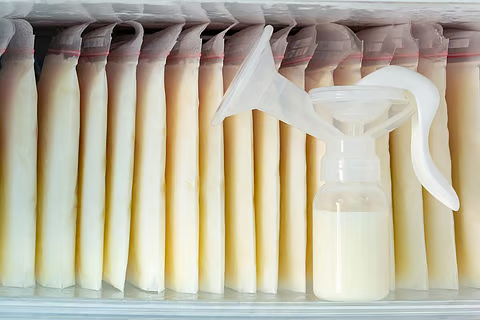
One of the best tricks for a small freezer is freezing breast milk bags flat. After filling and sealing the bag, lay it flat on a clean, level surface in the freezer. A small tray, baking sheet, plastic container lid, or freezer-safe flat bin can help keep the bag even while it freezes. Once the milk is solid, the flat bags can be stacked upright like files or laid in neat piles.
Flat freezing saves space and makes bags easier to organize by date. It also helps milk thaw more quickly because the frozen shape is thinner. Parents should make sure the seal is secure before laying bags flat. It is also wise not to overfill bags because milk expands when frozen. A flat, thin bag is much easier to store than a bulky rounded one.
Label Every Bag Before It Goes In
Labeling is not optional when freezer space is tight. Every bag or container should have the date the milk was expressed. If the milk will go to daycare or another caregiver, the baby’s name may also be needed. Some parents also write the amount and time of day, especially if they want to separate morning and evening milk, though that is not required for every family.
Label the bag before filling it if possible, because writing on a full bag can be awkward. Use a marker that will not smear in the freezer. Parents should also avoid relying on memory. In a busy household, “I’ll remember this was from Tuesday” rarely works for long. Labeling helps support the first-in, first-out system and prevents older bags from disappearing at the back of the freezer.
Create a First-In, First-Out System
A small freezer needs a rotation system. The oldest milk should be used first unless there is a specific reason not to. This is often called first-in, first-out. Parents can organize milk by date using bins, freezer bags, dividers, or even labeled sections. One simple method is to place newly frozen milk behind or under older milk so the oldest bags stay easiest to reach.
La Leche League International recommends labeling milk with the date and storing milk in small amounts to avoid waste. Its resource on storing human milk also suggests using the oldest milk first. In a small freezer, this habit matters because there is less room to spread things out. A clear rotation system prevents parents from finding old milk months later and wondering whether it is still usable.
Use Bins Instead of Loose Bags
Loose milk bags can quickly become a frozen mess. They slide behind food, get crushed, or end up scattered across shelves. Small bins help keep breast milk together and make the freezer easier to manage. Parents can use narrow freezer bins, reusable storage containers, or even small boxes that fit the freezer shelf. The exact container matters less than the system.
One bin can hold the newest milk that is still freezing flat. Another bin can hold frozen bags upright by date. A third small bin may hold “use next” milk. If freezer space is extremely limited, one narrow vertical bin may be enough. The goal is to prevent milk from becoming invisible. If parents cannot see what they have, they are more likely to over-pump, over-save, or accidentally waste milk.
Do Not Store Milk in the Freezer Door
The freezer door is not the best place for breast milk because temperature changes more when the door opens and closes. Breast milk should be stored toward the back of the freezer where the temperature is more stable. This can be challenging in a small freezer, but it is still worth planning. The door can hold ice packs or less sensitive items, while milk stays deeper inside.
If the freezer is part of a refrigerator, the back of the freezer shelf is usually better than the door. If using a tiny freezer compartment, parents should place milk as far from the opening as possible and avoid frequent door opening when they can. Stable temperature helps protect milk quality. A little organization can make this easier even when the freezer is small.
Cool Fresh Milk Before Combining
Parents sometimes want to combine milk from different pumping sessions to create one full bag. This can be done carefully, but freshly pumped warm milk should be cooled before being added to already chilled milk. Adding warm milk directly to cold or frozen milk can raise the temperature of the stored milk. A safer approach is to refrigerate the fresh milk first, then combine chilled milk from the same day if that fits the family’s storage plan.
Parents should also avoid adding fresh milk directly to frozen milk if it might partially thaw the frozen milk. If combining milk is part of the routine, use clear labels so the storage date reflects the oldest milk in the combined container. This keeps rotation honest and avoids accidentally treating older milk as newer than it is.
Do Not Build a Stash Bigger Than You Can Rotate
Many parents feel pressure to build a huge freezer stash, especially after seeing photos online. But a small freezer may not support that goal, and not every family needs it. A small rotating stash of 10 to 30 ounces may be enough for some parents. Others may need more because of work travel, exclusive pumping, childcare, or medical needs. The right amount depends on the family’s real situation.
A giant stash can create stress if there is no space, no rotation system, or no plan to use it. Milk may expire in the back of the freezer while the parent keeps pumping more. Instead of asking “How much can I freeze?” parents can ask “How much do we realistically need, and how will we use the oldest milk first?” Families preparing for work or caregiver feeding can review working parent feeding plans to match freezer storage with daily bottle needs.
Store Milk in Amounts Your Baby Actually Drinks
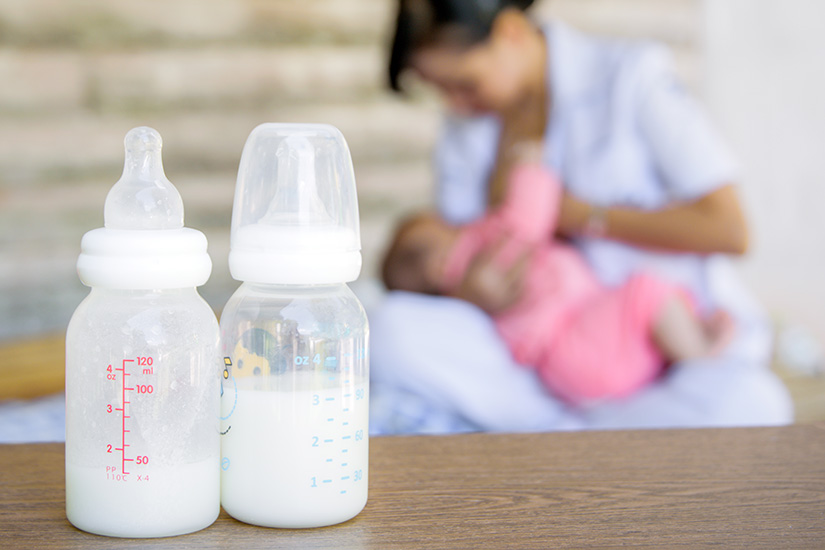
Freezer storage should match bottle habits. If a baby usually drinks 3 ounces, freezing mostly 3-ounce bags makes sense. If the baby sometimes wants a little more, add a few 1-ounce bags. If daycare requires specific bottle amounts, freeze in those amounts or thaw and prepare bottles according to the caregiver’s rules. The goal is to make the freezer support real feeding, not create awkward portions.
Families using bottles regularly can review the bottle-feeding guide for practical feeding considerations. Smaller portions can be especially helpful for breastfed babies who take paced bottles. It is often better to thaw a little more if needed than to thaw a large bag and waste milk the baby does not finish.
Protect Milk From Freezer Smells
Small freezers often hold many foods close together. Strong-smelling foods, open packages, and freezer burn can affect the freezer environment. Breast milk bags should be sealed tightly and stored inside another freezer bag or bin if needed. This adds protection from leaks, smells, and accidental damage.
Parents can also keep the freezer cleaner by removing old food, wiping spills, and avoiding overpacking. A crowded freezer may not circulate air well, and milk bags may get bent or crushed. A small milk bin inside the freezer helps create a protected zone. Even if the rest of the freezer is full, breast milk should have a defined space.
Plan for Power Outages
Power outages are stressful when breast milk is stored in the freezer. Parents should avoid opening the freezer during an outage unless necessary. A full freezer usually stays cold longer than a nearly empty one, but every situation depends on the appliance, room temperature, and outage length. Ice packs can help fill empty space and support temperature stability.
If milk still contains ice crystals, it may be able to be refrozen according to common safety guidance, but parents should check current recommendations and use judgment. If milk has fully thawed and warmed, it may need to be used quickly or discarded. Having a thermometer in the freezer can help parents understand whether temperature has been maintained. In a small freezer, a few frozen water bottles or ice packs can also help stabilize cold space.
Thaw Milk Safely
Freezing safely is only half of the routine. Thawing matters too. Parents should thaw the oldest milk first when possible. Milk can be thawed overnight in the refrigerator or by placing the sealed container under warm running water. Breast milk should not be microwaved because microwaving can create hot spots and may affect milk quality. Once thawed, milk should be handled according to safe storage guidance.
Thawed milk may smell or look different. Fat can separate, so gently swirl the milk rather than shaking aggressively. If the baby refuses thawed milk because of smell or taste, parents can ask a lactation professional about possible high lipase activity and storage strategies. This is not always a safety issue, but it can affect whether the baby accepts frozen milk. Testing one frozen bag before building a large stash can be a smart idea.
Keep a Freezer Inventory
A freezer inventory can be very simple. Parents can keep a note on the freezer door, a phone note, or a small paper list inside a kitchen cabinet. The list can include the date range and total ounces. Some parents track every bag. Others only track weekly totals. The best system is the one the parent will actually maintain.
An inventory helps prevent over-saving and makes it easier to send milk to a caregiver. It also reduces the anxiety of digging through frozen bags while holding a baby. In a small freezer, knowing what is available is almost as important as storing it safely. A clear inventory can turn a crowded freezer into a manageable feeding tool.
When Formula Is Part of the Backup Plan
Some families freeze breast milk and also use formula. That can be a practical and healthy feeding plan when it fits the baby and parent. A parent may not need to freeze as much milk if formula is available as backup. Another parent may use frozen milk for daycare and formula for occasional emergencies. The important thing is to understand preparation, storage, and how each feeding choice fits the overall plan.
Families using formula alongside breast milk can review formula-feeding basics. A mixed feeding plan should not be built on guilt. It should be built on safety, clarity, and what the family can realistically sustain. A small freezer may be enough when the family’s backup plan is flexible.
The Bottom Line on Freezing Milk in a Small Freezer
Freezing breast milk safely in a small freezer is mostly about systems. Freeze small portions. Use clean storage bags or containers. Leave room for expansion. Label every bag. Freeze flat. Store milk toward the back, not in the door. Use bins to organize. Rotate oldest milk first. Keep a simple inventory. Thaw safely and avoid microwaving. These habits make a small freezer work much better.
Parents do not need a huge stash to be successful. They need milk that is stored safely, easy to find, and used before it gets forgotten. A small freezer can support breastfeeding, pumping, work, bottle-feeding, and backup plans when it is organized with real life in mind. The goal is not to impress anyone with how much milk is frozen. The goal is to protect the milk the parent worked hard to express and make feeding easier when the baby needs it.