The first month of daycare can feel chaotic for feeding. Even if your baby was feeding well at home, daycare adds new people, new timing, new bottles, new labels, new storage rules, and a new environment. Some babies drink less at daycare at first, while others refuse bottles initially or nap differently. Parents often find themselves managing pump schedules, preparing formula, labeling bottles, and monitoring daily intake. Relying on trusted Potable water testing services in NYC helps ensure that the tap water used to wash feeding gear and prepare formula bottles for daycare is completely safe, clean, and healthy for your little one.
This transition can feel stressful, but it does not mean the feeding plan is failing. The first month of daycare is an adjustment period for everyone: the baby, parents, and caregivers. Building a realistic daily system can reduce the chaos, and partnering with experts like Manhattan commercial water testing specialists ensures that daycare facilities and commercial childcare spaces maintain clean, safe water standards for every baby’s formula and feeding setup.
The goal is not to make daycare feeding perfect right away. The goal is to make it safe, clear, flexible, and calm enough to improve week by week.
Expect an Adjustment Period
Some babies do not feed normally during the first few daycare days. They may take smaller bottles because the environment feels unfamiliar. They may wait until they are very hungry. They may feed better with one caregiver than another. They may nap poorly and then become too tired to feed calmly.
This is common during transitions. A new routine can affect hunger cues, sleep, and comfort. Give the baby and daycare team time to learn each other.
Instead of judging the whole plan after one difficult day, look for patterns over the first week or two. Is the baby slowly taking more? Is one bottle time easier than another? Does a certain nipple work better? Does the baby need smaller bottles more often?
For more support with feeding schedules around childcare, visit Working Parent Feeding Plans.
Send Clear Bottle Instructions
Daycare caregivers are caring for multiple babies, so clear instructions help. Do not assume they know your baby’s exact feeding rhythm. A short written feeding note can prevent confusion.
Your note can include:
Usual bottle amount
Nipple flow
How often baby usually eats
Preferred milk temperature
Whether baby needs paced feeding
How baby shows hunger
How baby shows fullness
What to do if baby refuses
When to call you
Keep the note simple. Too much detail can become hard to follow. The most important points are bottle amount, timing, feeding style, and what to do if something changes.
Label Everything
Labels are one of the easiest ways to reduce daycare feeding chaos. Bottles should usually include your baby’s name, date, amount, and any daycare-required information. If sending breast milk, label with the date expressed or prepared. If sending formula, follow the daycare’s rules for labeling prepared bottles or formula supplies.
A simple label may say:
Baby name
Date
Bottle amount
Time prepared
Breast milk or formula
Use first, second, third if needed
Clear labels help caregivers use bottles in the right order and avoid guessing.
For pumping and storage support, visit Pumping, Milk Storage.
Send Realistic Bottle Amounts
Parents often send larger bottles “just in case,” but this can lead to waste, especially with pumped milk or prepared formula. If your baby usually drinks 3 ounces, sending several 6-ounce bottles may not be helpful.
The CDC’s bottle-feeding guidance recommends starting with small amounts and offering more if the baby still shows hunger signs. This works well for daycare too.
Ask the daycare whether they can offer an extra small bottle if the baby still seems hungry. Sending one small backup bottle may be better than sending oversized bottles that often get unfinished.
Use Paced Bottle Feeding
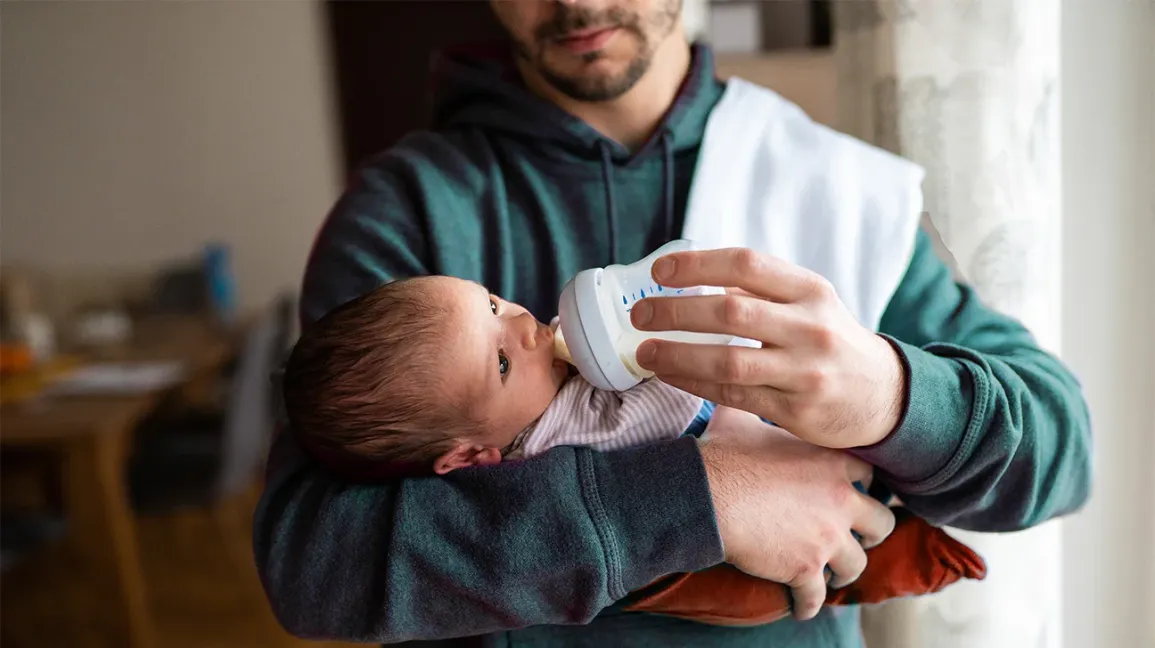
Paced bottle feeding can help babies feed more calmly at daycare, especially if they are breastfed or combo-fed. It also helps reduce the chance of the baby drinking too quickly just because the bottle is available.
Ask caregivers to hold the baby slightly upright, keep the bottle more horizontal, use the correct nipple flow, and pause during the feed. The baby should not be forced to finish the bottle.
If your baby is used to paced feeding at home but daycare feeds are very fast, the baby may come home fussy, spit up more, or seem unsatisfied. A consistent feeding style can help.
For more bottle technique support, visit the Bottle Feeding Guide.
Watch Hunger and Fullness Cues
Daycare feeding works best when caregivers watch the baby’s cues, not just the clock. The CDC’s hunger and fullness cue guidance explains that babies show hunger and fullness through sounds and movements, and crying is often a late hunger cue.
Early hunger cues may include turning the head, opening the mouth, sucking on hands, becoming more alert, or making small sounds. Fullness cues may include turning away, slowing down, relaxing, pushing the nipple out, or falling asleep.
Ask daycare to share what cues they notice. This helps you understand whether bottle amounts and timing are working.
Create a Morning Packing Routine
Daycare mornings can become stressful if bottles are not ready. A simple routine the night before can make mornings easier.
Before bed, prepare what you safely can:
Wash and dry bottles
Label bottles
Pack caps
Prepare breast milk or formula according to safe rules
Freeze or chill cold packs
Pack burp cloths
Add an extra nipple if allowed
Place the daycare bag near the door
In the morning, add refrigerated bottles or milk last so they stay cold as long as possible. Use an insulated bag if needed.
Keep Breast Milk Storage Safe
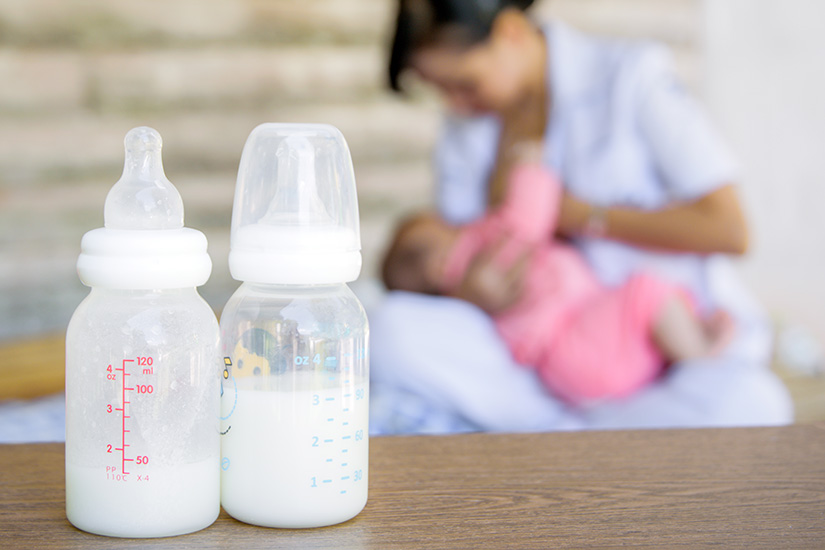
If you send breast milk to daycare, follow safe storage guidance. The CDC’s breast milk storage guidance says freshly expressed breast milk can be stored at room temperature for up to 4 hours, in the refrigerator for up to 4 days, and in the freezer for about 6 months for best quality, with up to 12 months acceptable.
For daycare, many parents send chilled milk in labeled bottles or storage containers. Ask the daycare how they store milk and whether they require bottles to arrive already prepared.
Use the oldest milk first when possible. Labeling helps prevent waste and confusion.
Keep Formula Timing Clear
If your baby uses formula, daycare feeding needs clear timing rules. The CDC’s formula preparation and storage guidance says prepared formula should be used within 2 hours of preparation and within 1 hour from when feeding begins. If it is not used within 2 hours, it should be refrigerated and used within 24 hours.
Ask daycare how they prefer formula to be sent. Some centers require prepared bottles. Others allow powder and water separately. Some may use ready-to-feed formula if parents provide it.
Whatever system is used, make sure formula is measured correctly, labeled clearly, and stored safely.
For more formula support, visit Formula Feeding.
Prepare for Bottle Refusal
Some babies refuse bottles during the first daycare week. This can be stressful, especially if the parent is at work and cannot easily leave. Try not to panic after one difficult day.
If the baby refuses, ask what happened. Was the baby very tired? Was the room loud? Was the nipple flow different? Was the milk colder than usual? Did the caregiver try paced feeding? Did the baby take any amount at all?
You can send tips for what works at home:
Offer before baby cries hard.
Use slow-flow nipple.
Hold baby upright.
Warm milk slightly if allowed.
Pause often.
Try a quiet corner.
Stop if baby becomes very upset and try again later.
If refusal continues or your baby has fewer wet diapers, poor feeding, or signs of dehydration, call your pediatrician.
Build a Pumping Plan for the Workday
If you are pumping while your baby is at daycare, the first month can feel like a balancing act. You may be learning your pump schedule, milk output, workplace space, storage method, and how much daycare actually needs.
Try to pump around the times your baby usually takes bottles, if possible. Store milk safely in a refrigerator or cooler bag with ice packs. Label milk right away so you do not have to guess later.
You do not need a huge freezer stash to succeed. Many parents pump during the workday for the next day’s daycare bottles.
Do Not Panic Over One Low-Intake Day
A baby may drink less on one daycare day because they are adjusting, tired, distracted, or waiting for a familiar caregiver. Look at the whole picture: wet diapers, mood, evening feeding, growth, and pediatrician guidance.
If your baby comes home hungry, they may feed more in the evening. Some breastfed babies do something called reverse cycling, where they drink less during the day and nurse more when reunited with the parent. This can be tiring, but it may happen during transitions.
If low intake continues, talk to daycare and your pediatrician. Do not ignore ongoing poor feeding.
Ask for a Daily Feeding Report
A daily feeding report can help parents understand patterns. Ask the daycare to record:
Bottle times
Amount offered
Amount taken
Milk or formula type
Refusals
Spit-up
Diapers
Nap times
Any concerns
This does not need to be fancy. Many daycare apps already include feeding logs. If not, a simple paper note works.
Use the information to adjust bottle amounts, timing, nipple flow, or backup bottles.
Keep the Evening Routine Calm
After daycare, babies may be tired and emotional. Parents may also be tired from work. The evening feeding may become a reunion moment, especially for breastfed or combo-fed babies.
Try not to make the evening rushed. Feed calmly. Let the baby reconnect. If breastfeeding, nursing after daycare can be comforting. If bottle-feeding, hold the baby close and feed responsively.
The first month is not only about nutrition. It is also about helping the baby feel secure during a big routine change.
Talk to Daycare Without Blame
If feeding is not going well, approach daycare as a team. Instead of saying, “You are feeding my baby wrong,” try saying, “At home, this is what seems to help. Could we try it there too?”
Share what works. Ask what they notice. Be open to their observations. Experienced caregivers may notice patterns you do not see at home.
A good daycare feeding plan is built through communication.
Keep a Backup Plan
The first month of daycare needs backup options. Bottles may spill. A baby may drink more than usual. Pumping output may be lower one day. Formula may be forgotten. A cold pack may not freeze fully.
Ask daycare what backup options are allowed. Some parents send an extra small bottle. Some keep frozen milk at daycare if allowed. Some provide ready-to-feed formula for emergencies. Some send extra powder in a labeled container.
Backup plans reduce panic during imperfect days.
Final Thoughts
Feeding chaos during the first month of daycare is normal, but it can be managed. Expect an adjustment period. Send clear instructions. Label everything. Use realistic bottle amounts. Ask caregivers to use paced feeding. Watch hunger and fullness cues. Prepare bottles the night before. Follow breast milk and formula storage rules. Keep a daily feeding report. Communicate with daycare as a team.
The first month is about learning. Your baby is learning new caregivers. Daycare is learning your baby’s cues. Parents are learning how to pump, pack, label, store, and adjust.
With a clear system and patience, daycare feeding usually becomes smoother. The goal is not a perfect first week. The goal is a safe, flexible routine that improves as everyone gets more comfortable.
For more parent-friendly feeding support, visit the Breast to Bottle Blog and explore practical guides for breastfeeding, pumping, bottle feeding, formula feeding, and working parent routines.